Email Us

Tarmac Driveway Ideas and Trends for Bath Homeowners
Thinking about giving your driveway a facelift? Your driveway is one of the first things people notice about your home, so it’s worth getting right. Tarmac for driveways remains one of the smartest choices for homeowners across Bath, offering an easy way to update the look and function of your frontage without a full rebuild. Whether you’ve been exploring tarmac driveway ideas for your own property, or comparing your options with a paving company in Bath, this guide walks you through the trends shaping 2026, what to check before committing to a design, and where a good local installer actually makes the difference.
Tarmac has moved on a lot from the plain black surface most people picture. Coloured finishes, decorative borders, and smart built-in features are now just as common as the traditional look.
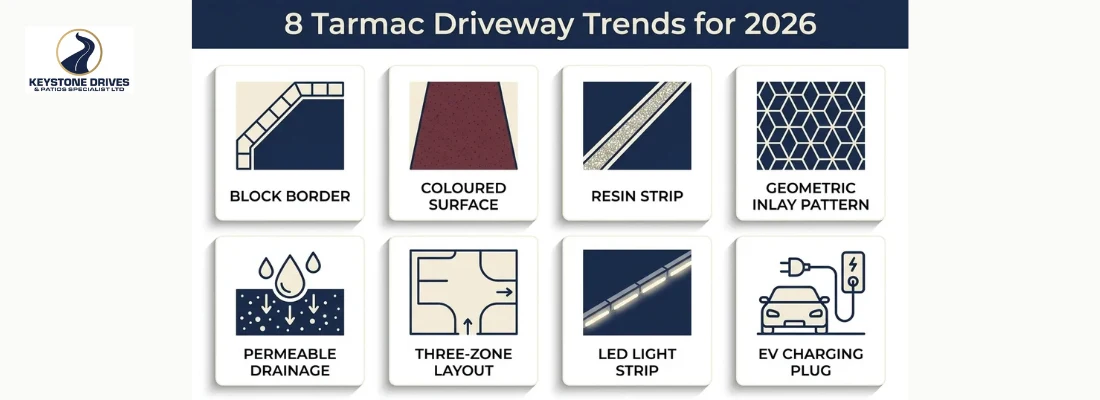
Tarmac Driveway Ideas For 2026
A new driveway is one of the few home improvements that genuinely affects kerb appeal and daily practicality at the same time. Bath’s weather, with regular rainfall and colder winter months, makes material choice especially important. Tarmac driveways in Bath remain a popular starting point because the material is flexible enough to support almost any of the ideas below, from a subtle refresh to a full redesign.
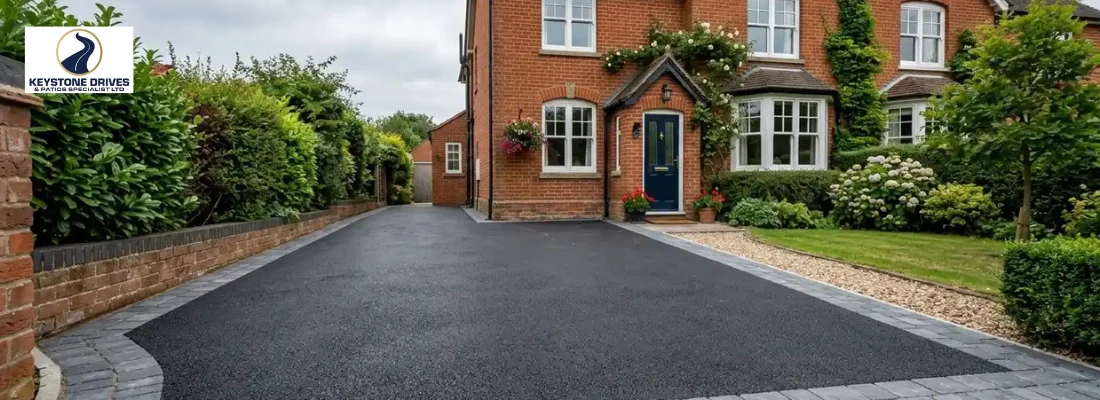
Classic Black Tarmac with Block Paving Borders
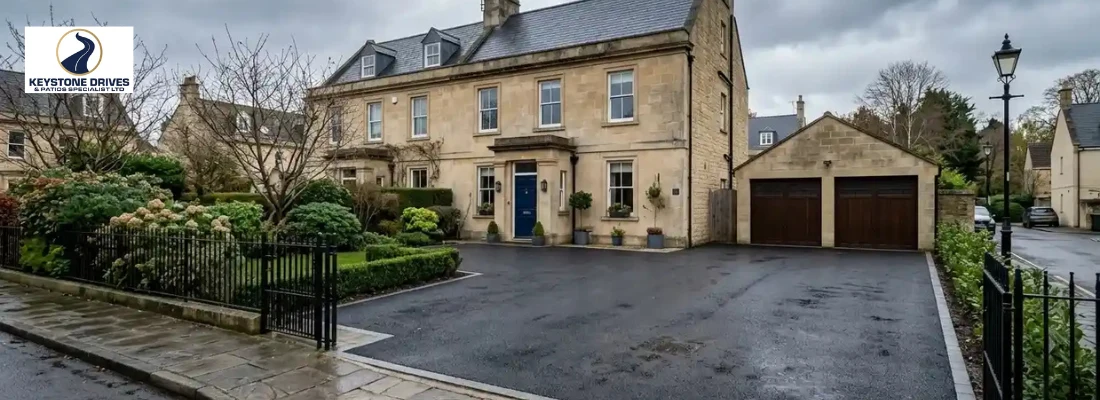
Pairing a smooth black or charcoal tarmac surface with a neat block paving border remains one of the most requested driveway looks, mainly because the border protects the tarmac edge from crumbling over time. Homeowners across Bath often choose this combination to match existing brickwork or stonework on period and newer builds alike.
Key benefits of this approach:
- Contains the tarmac edge, preventing cracking or breakaway at the border line
- Available in sandstone, charcoal, or terracotta to match different property styles
- Suits both period Bath homes and newer builds without clashing
- Low maintenance once installed, with the border doing most of the structural work
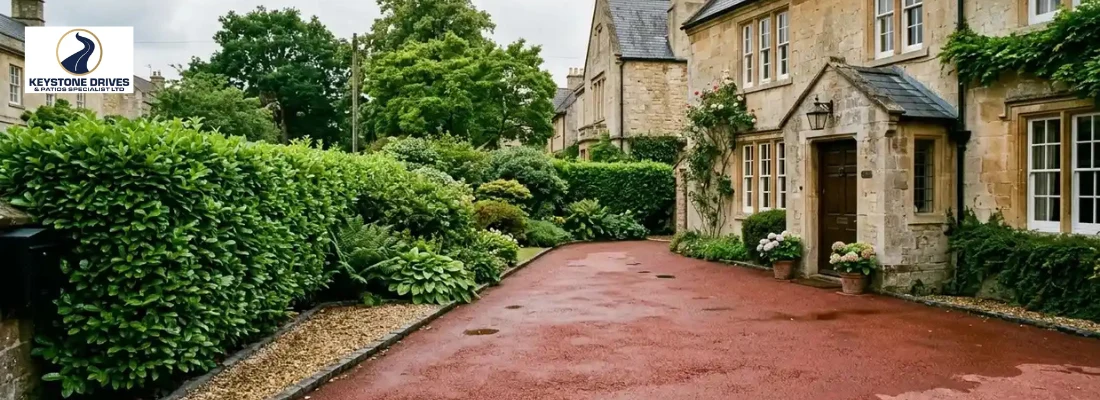
Coloured Tarmac Driveways For A Bolder Look
Coloured tarmac lets homeowners choose a driveway that stands out rather than blends in, without sacrificing structural performance compared to standard black tarmac. Red, terracotta, and deep green blends are increasingly popular against Bath stone frontages and green gardens.
What to know before choosing coloured tarmac:
- Colour comes from altering the aggregate and binder, not a surface dye
- Performs identically to standard black tarmac in terms of durability
- Red, terracotta, and green are the most requested shades in Bath
- UV-resistant top coat is recommended at installation to slow fading
- Works especially well against Bath stone and green frontages
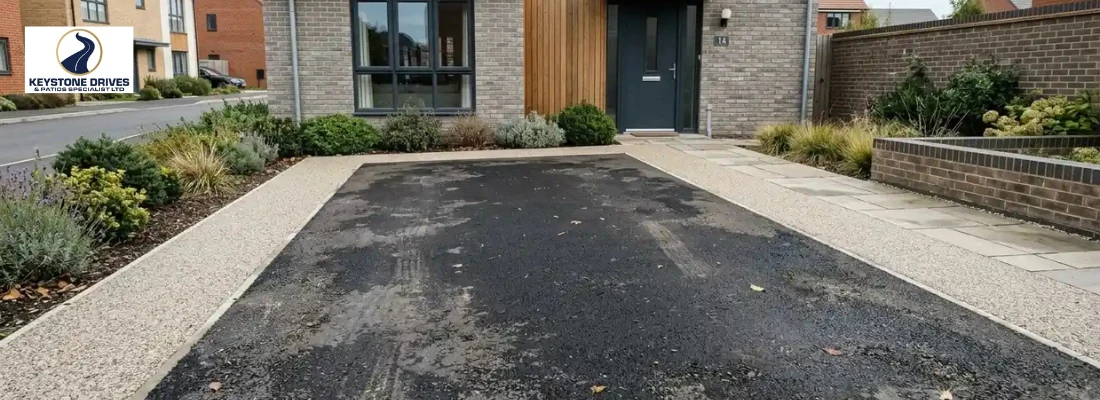
Tarmac Paired With Resin Bound Sections
Combining a tarmac base with resin-bound strips or panels gives a driveway a premium, layered finish at a lower cost than a full resin surface. This works best when resin is placed along drainage-prone edges or as a central strip.
Why homeowners choose this combination:
- Resin-bound sections are naturally permeable, aiding drainage
- Costs less than a full resin driveway while keeping a similar look
- Most effective along edges or as a central strip, not the full surface
- Suits homeowners who want a resin aesthetic on a tarmac budget
Decorative Inlays And Patterns
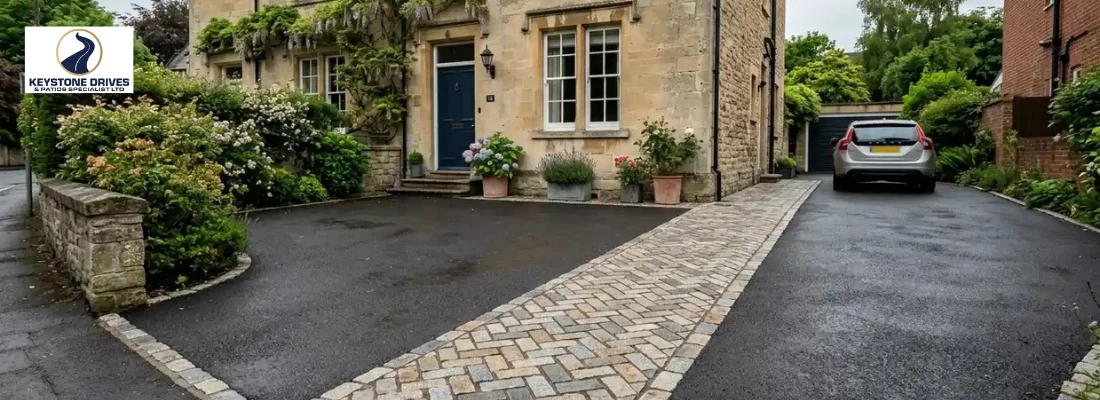
Adding cobble setts, granite strips, or contrasting tarmac colours in a geometric pattern turns a plain driveway into a more distinctive feature, particularly useful for longer or wider frontages that would otherwise look like one flat expanse. Homeowners in period properties should also check conservation area restrictions in Bath before finalising a design, since some inlay materials and patterns may need approval in protected zones.
Common ways homeowners use inlays:
- Central dividing strip along longer driveways to break up flat tarmac
- Framing the entrance point where the driveway meets the road
- Herringbone or geometric patterns using cobble or granite
- Popular across Bath and North East Somerset for a finished, defined edge
Permeable Tarmac For Better Drainage
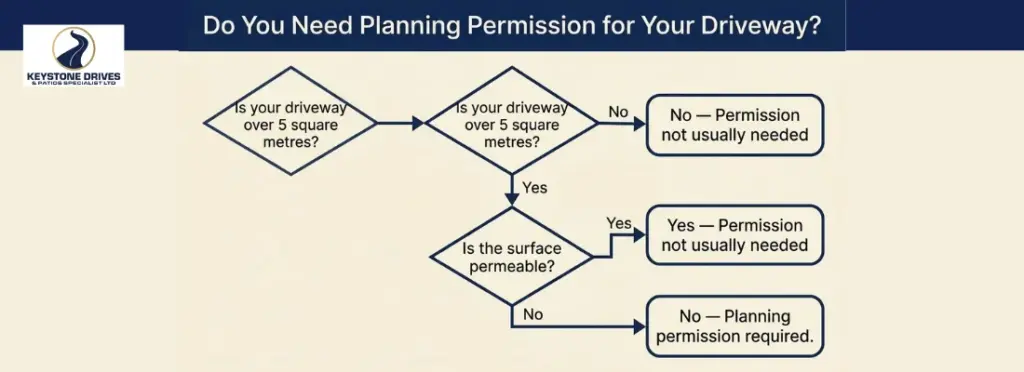
Permeable tarmac allows rainwater to soak through the surface into the ground, reducing runoff and standing water and, in many cases, removing the need for planning permission. Under current planning permission rules for driveways, driveways over 5 square metres generally require planning permission unless the surface is permeable or drains to a permeable area.
Key facts About Permeable Tarmac:
- Water passes through the surface rather than running off or pooling
- Driveways over 5 square metres typically need planning permission unless permeable
- Reduces slippery standing water after heavy rain, common in Bath
- One of the simplest ways to avoid the planning permission requirement
Multi-Zone Layouts
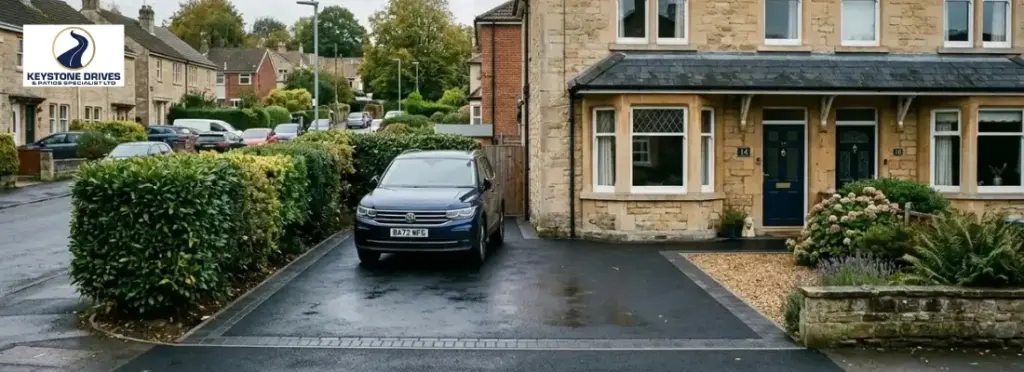
Splitting a driveway into zones, such as a parking area, walkway, and planted strip, suits busier households with multiple vehicles or frequent visitors by keeping foot traffic and parking clearly separated.
Advantages of a multi-zone layout:
- Separates vehicle space from pedestrian walkways
- Gives visitors and delivery drivers a clear place to park
- Planted or gravel strips soften the overall appearance
- Best suited to larger Bath properties with generous frontages
Built-In Lighting
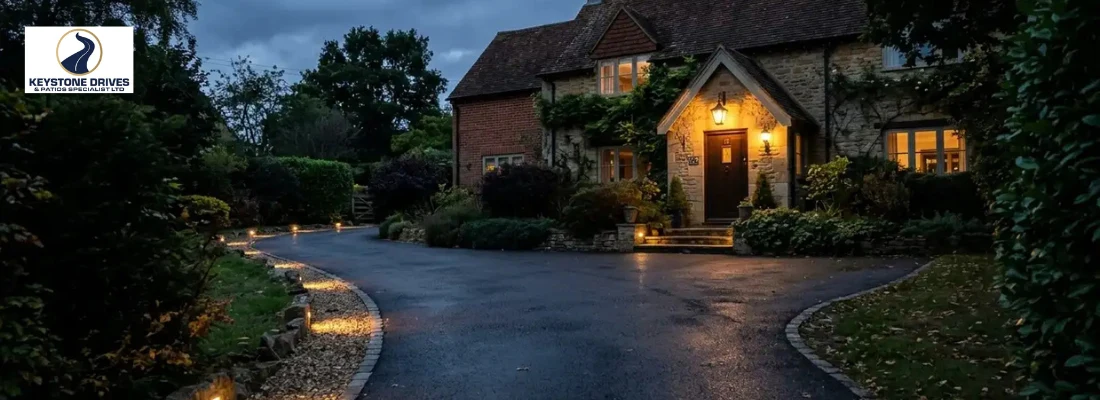
Low-level LED lighting along the edge of a tarmac driveway improves safety after dark and adds kerb appeal, and is most cost-effective when wired in during the original installation rather than added later.
Why lighting is worth planning in advance:
- Improves visibility on sloped, uneven, or multi-level driveways
- Cheaper and less disruptive to install during the original build
- Adds a more finished, higher-end appearance after dark
- Reduces trip hazards around kerb lines and level changes
Smart Driveway Features
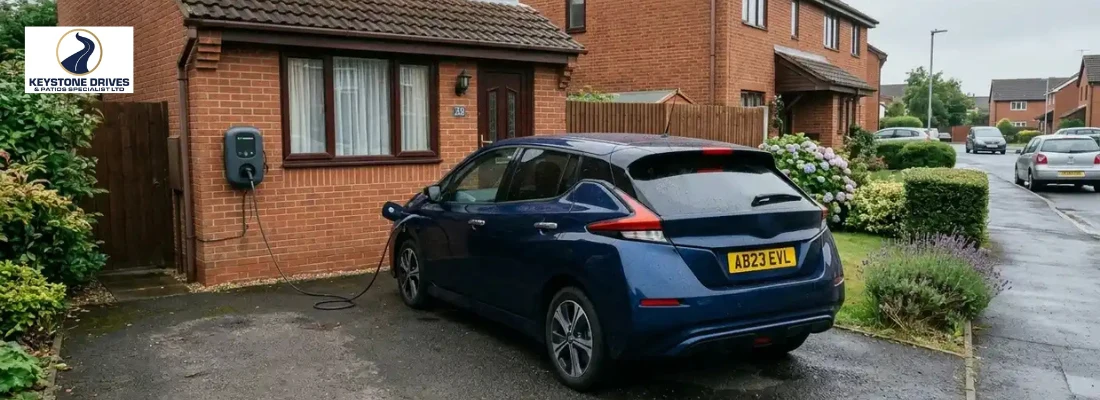
Building EV charging points, motion-activated lighting, and frost protection into a driveway from the start avoids the cost and disruption of retrofitting them later and is becoming a standard expectation as more Bath households switch to electric vehicles.
Smart features increasingly requested by homeowners:
- EV charging points installed alongside the tarmac surface
- Motion-activated lighting for added security
- Frost protection built under the surface for icy winters
- Easier and cheaper to install during the original build than to retrofit
Tarmac Driveway Installation in Bath: Choosing the Right Team
The finish on a tarmac driveway tells you almost nothing about how well it was built, since the sub-base, compaction, and drainage falls are invisible once the surface goes down. A good installer will walk you through the groundwork before discussing the finish colour, provide a written, itemised quote rather than a single, rushed figure, and hold proper insurance with a written guarantee. Real experience with Bath’s older housing stock, shifting ground, and conservation area rules matters more than most homeowners expect, and it’s usually the difference between a driveway that lasts and one that needs to be redone within a few years.
Keystone Drives & Patios Specialist Ltd has installed tarmac driveways across Bath and Somerset for many years, and every point above is one we’re happy to be judged against. Every job starts with a proper sub-base and a written quote, every installation carries a workmanship guarantee, and we’re fully insured throughout. We also know Bath’s conservation area rules well enough to tell you upfront whether your design will need planning permission, rather than leaving that for later.
We’ve covered similar projects nearby in Corsham, Westbury and surrounding areas, providing our full range of paving and landscaping services in Bath.
Conclusion
Tarmac remains one of the most practical, adaptable surfaces available for a Bath driveway, whether the goal is a classic black-and-border finish, a bold coloured surface, or a permeable, multi-zone design built for the long term. Getting the sub-base, drainage, and edging right matters more than the finish on top, which is where a properly established local installer earns their fee.
Thinking about a driveway project? Get in touch for a free, no-obligation quote, or call the team to talk it through.
FAQ'S
Yes, applying a seal coat every few years helps protect the surface from UV fading, oil stains, and general wear, keeping it looking newer for longer.
Yes, in many cases, tarmac can be laid over an existing surface, though this depends on the condition of the underlying surface and is best confirmed during a site visit.
Yes, coloured tarmac performs just as well structurally, though a UV-resistant coating is recommended to help the colour hold up against sun exposure.
No, in most cases. UK guidance generally requires planning permission for new driveways over 5 square metres unless the surface is permeable or drains to a permeable area, which is why permeable tarmac is one of the easiest ways to avoid needing it.
Yes, a well-installed tarmac driveway typically lasts 15 to 20 years, and often longer with proper maintenance and a well-built sub-base.
Yes, tarmac is generally one of the most cost-effective driveway surfaces available, usually costing less per square metre than block paving or resin-bound systems.
Most residential tarmac driveways take between 2 and 4 days to install, depending on the size, groundwork required, and weather conditions.
No, freshly laid tarmac needs time to cure and harden, and it’s best to avoid parking on it for at least 48 to 72 hours after installation.