Email Us

10 Driveway Edging Ideas Worth Considering for Better Kerb Appeal
Walk up to almost any house, and your eye goes straight to the driveway before it reaches the front door. It is the first surface people step onto, the first thing a delivery driver sees, and often the first clue about how well a property has been looked after. Yet edging is the detail most homeowners overlook until their gravel has spread across the lawn or their block paving has started to shift at the sides.
A well-chosen border does more than tidy things up. It holds materials in place, helps with drainage, and gives an otherwise plain surface a finished, professional look. Whether you have a period stone cottage, a modern semi, or somewhere in between, there is an edging style that suits both your budget and your home.
Below are ten driveway edging ideas that work well across the UK, along with realistic costs, maintenance notes, and guidance on choosing the right option for your property.
Why Driveway Edging Matters More Than You Might Think
Edging is easy to underestimate because it does not do the heavy lifting a driveway surface does. But without it, even a well-laid drive can start to look untidy within a year or two.
Kerb Appeal And Property Value
Estate agents often point to the driveway as one of the first things buyers notice. A crisp, well-defined edge signals that a property has been maintained, while a crumbling or non-existent border can make even a recently resurfaced driveway look neglected. If you are planning to sell in the next year or two, this is one of the more cost-effective improvements you can make.
Practical Benefits Beyond Looks
Edging is not purely decorative. A good border:
- Stops loose materials like gravel or chippings spreading onto lawns and paths
- Helps direct surface water towards drainage points rather than pooling
- Provides structural support that stops the edges of block paving or tarmac from breaking away under the weight of vehicles
- Creates a clear visual boundary between the driveway and planting beds or grass
In other words, edging protects the investment you have already made in your driveway surface.
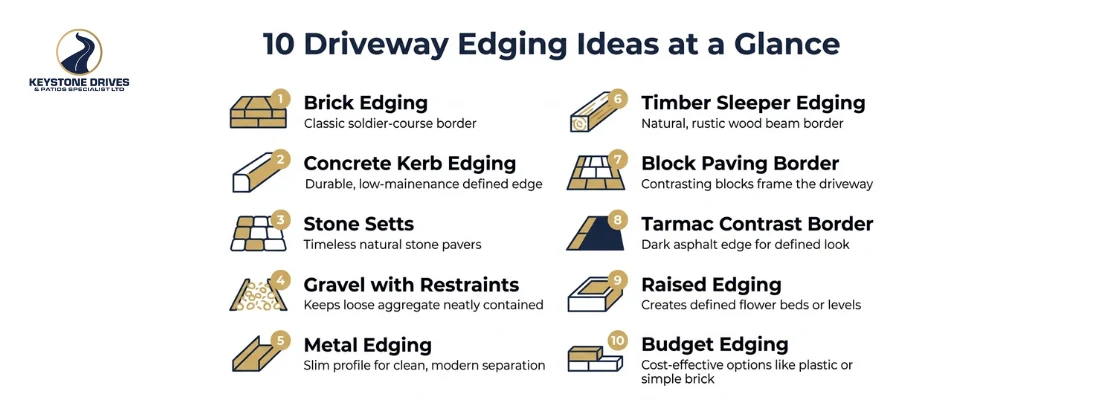
10 Driveway Edging Ideas To Consider For Your Home
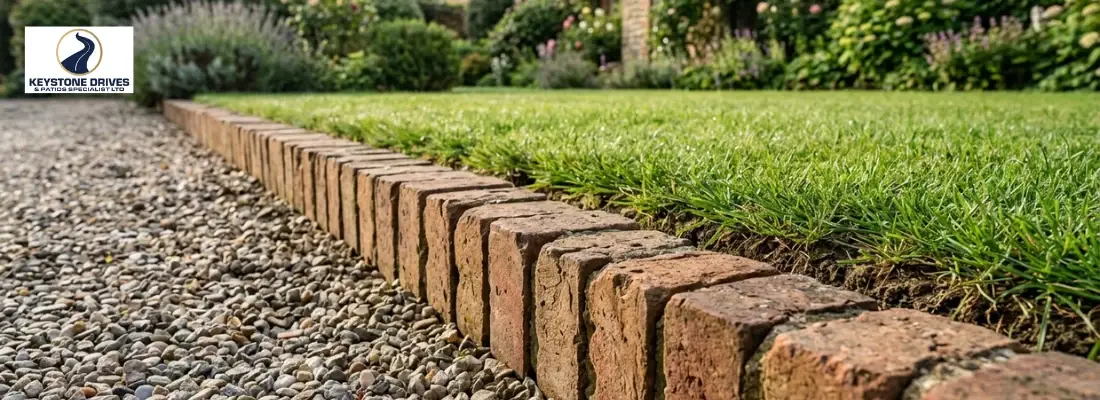
1. Brick Edging (Soldier Course)
Brick is one of the most widely used driveway borders in the UK, and it is easy to see why. Laid in a soldier course, with each brick standing upright end to end, it creates a crisp, continuous line that suits almost any property style, from Victorian terraces to newer builds.
Brick edging pairs particularly well with gravel driveways, since the firm border stops loose stones migrating onto the lawn. It is also relatively simple to repair, since a single damaged brick can be lifted and replaced without disturbing the rest of the run.
Best suited to: traditional and period-style homes, gravel or resin driveways.
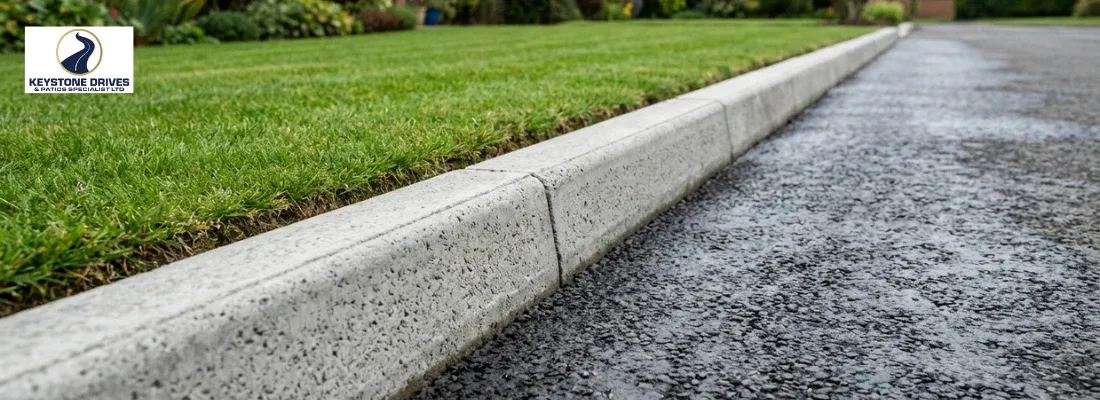
2. Concrete Kerb Edging
Concrete kerbing is a practical, no-fuss option that holds up well under regular vehicle use. It comes either as pre-cast kerb units or poured in situ, and can be finished in a range of textures and colours to match or contrast with the main driveway surface.
The main appeal is durability against cost. Concrete edging typically lasts for decades with minimal upkeep, making it a sensible choice for anyone who wants a tidy finish without ongoing maintenance.
Best suited to: modern properties, high-traffic driveways, tarmac or block paving surfaces.
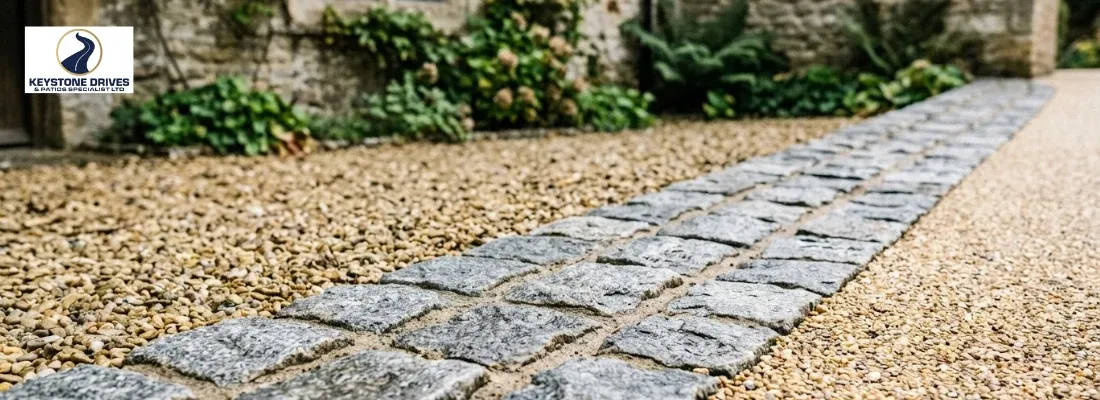
3. Stone Setts For A Premium Natural Finish
Granite and sandstone setts bring a more upmarket, natural look, and they are particularly effective on properties built from stone themselves. A single row of setts laid in a soldier course along both edges creates a subtle but noticeable lift in overall quality.
Granite is the harder of the two and copes well with repeated tyre contact at the driveway edge without chipping. Sandstone offers a softer, warmer tone that tends to suit older or rural properties.
Best suited to: stone-built or period homes, properties in conservation areas, driveways where a premium finish matters.
4. Gravel Edging with Steel or Timber Restraints
If your driveway surface is gravel, the edging itself needs to do a specific job: keeping the stones contained. Steel or aluminium restraint strips, or pressure-treated timber battens, are commonly used to create a firm boundary that stops gravel migrating during rain or regular foot and vehicle traffic.
These restraints sit largely below ground level, so the visible finish is minimal and unobtrusive, which suits homeowners who want function without a strong design statement.
Best suited to: gravel driveways of any style, sloped driveways where erosion is a concern.
5. Metal Driveway Edging For A Modern Finish
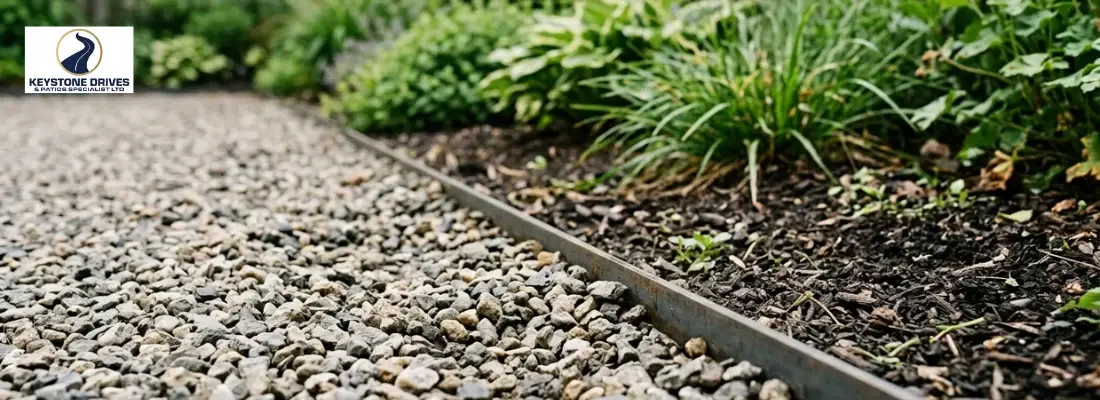
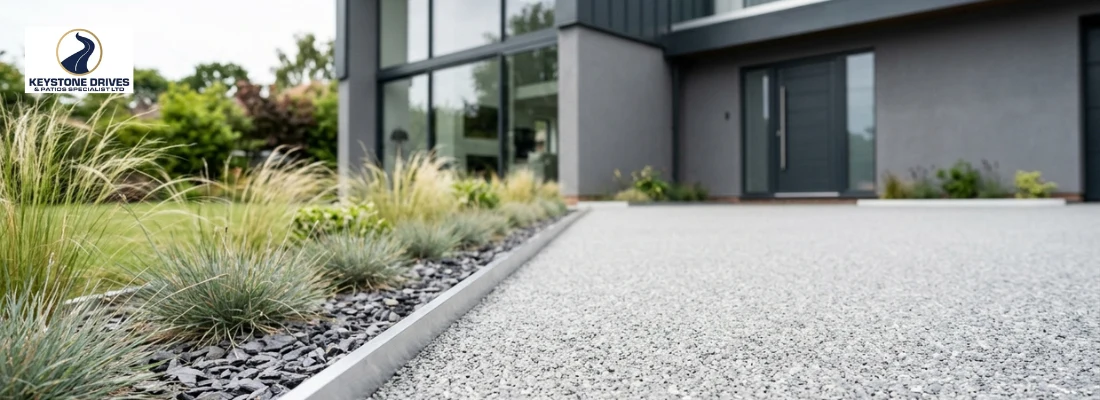
Steel and aluminium edging strips have become increasingly popular over the past few years, particularly on newer or renovated properties. The thin, clean lines suit minimalist garden designs and give a driveway a sharp, architectural finish that other materials struggle to match.
It is also low maintenance. Once installed, metal edging rarely needs anything beyond an occasional wipe down, and it holds its shape well even under vehicle weight.
Best suited to: contemporary homes, minimalist landscaping, resin or gravel driveways.
6. Timber Sleeper Edging for a Rustic Look
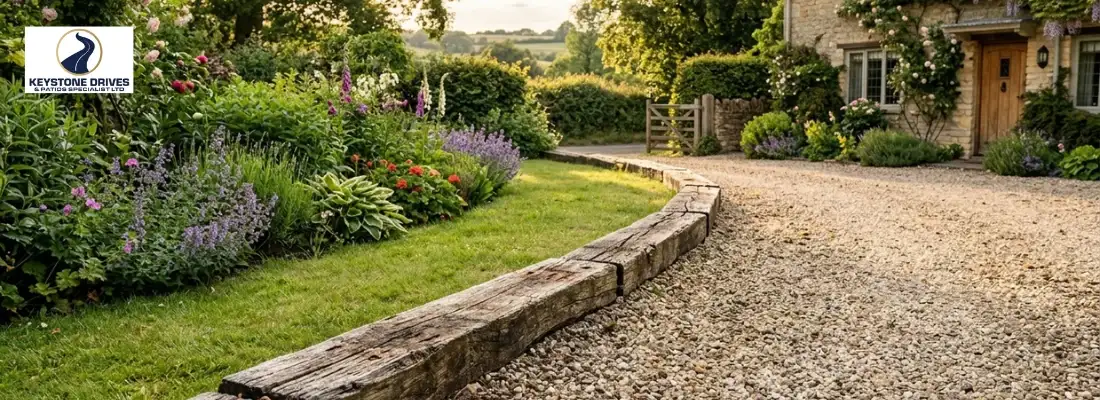
Railway sleepers or treated timber battens create a softer, more natural border that works particularly well for rural properties or driveways surrounded by planting. The warm tone blends easily with lawns, borders, and gravel surfaces.
Pressure-treated timber is worth the small extra cost, since it resists rot and moisture far better than untreated wood, meaning the edging will hold its shape for years rather than needing replacement after one wet British winter.
Best suited to: countryside and cottage-style properties, gravel driveways, sloped gardens.
7. Block Paving Border to Frame an Existing Driveway
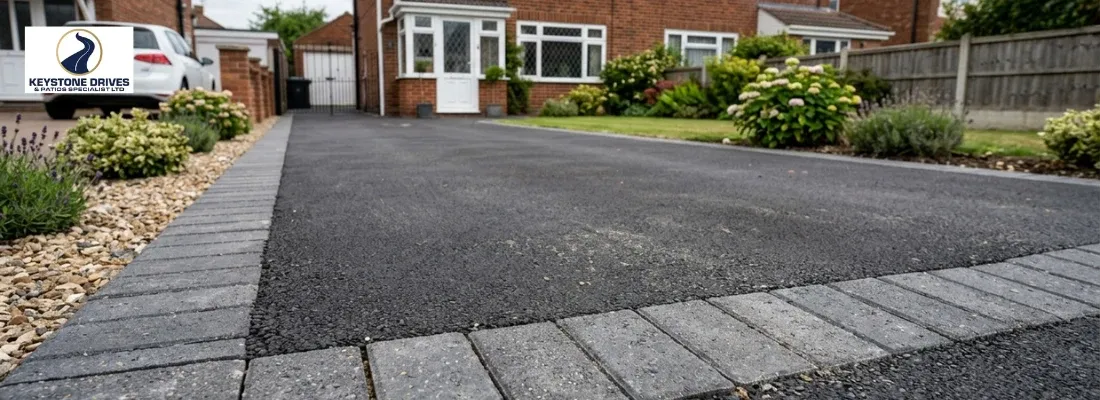
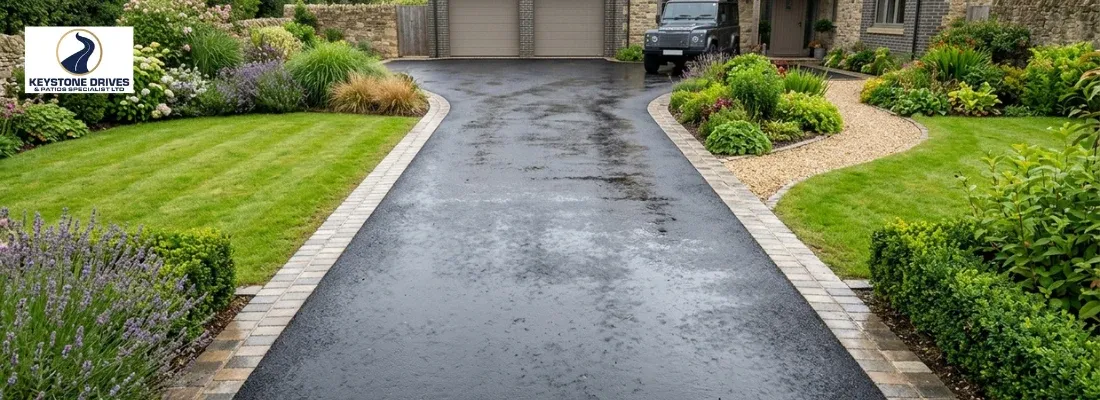
If you already have a plain tarmac or concrete driveway, a block paving border is one of the simplest ways to add definition without resurfacing the whole area. A contrasting colour or pattern, laid in a single or double row, frames the driveway and instantly makes it look more considered.
This is also a popular choice where herringbone or basket weave patterns are used purely at the edges, giving a decorative touch without the cost of paving the entire surface. Industry guidance from Interpave, the UK’s precast concrete paving trade body, confirms that a solid edge restraint is essential wherever a block paving pattern changes direction, since this is where individual blocks are most likely to shift under load.
Best suited to: upgrading an existing plain driveway, properties wanting a decorative but budget-conscious finish.
8. Tarmac Driveway Edging with a Contrast Border
For tarmac driveways specifically, a common approach is to add a contrasting border, often brick, block paving, or metal, around the perimeter while leaving the main surface as tarmac. This keeps costs down while still lifting the overall appearance considerably.
It is worth checking the condition of the tarmac itself before committing to new edging. If the surface is cracking or has been down for more than fifteen years, it may be more cost-effective to address that first.
Best suited to: tarmac driveways in reasonable condition, homeowners wanting a quick visual upgrade.
9. Raised Edging for Sloped Driveways
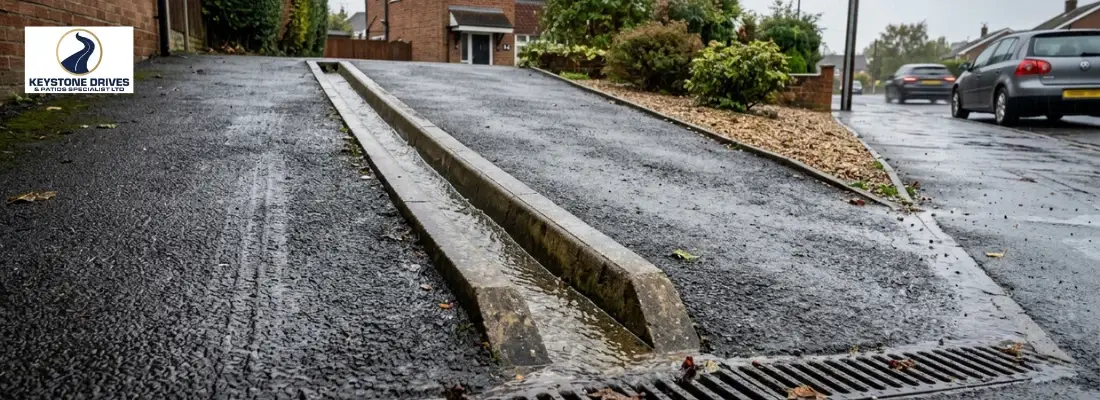
Sloped driveways bring an extra challenge: water and loose material naturally travel downhill. Raised edging, built slightly higher than a standard border, helps manage this by directing runoff towards a drainage channel rather than letting it wash across the surface or onto the road.
This is one area where it genuinely pays to get advice from an experienced contractor, since the height, gradient, and drainage point all need to work together to avoid problems later.
Best suited to: sloped or inclined driveways, properties with drainage or erosion issues.
10. Cheap Driveway Edging Ideas on a Budget
Not every project needs a premium finish. If budget is the main concern, there are still several options that look neat without a large outlay:
- Basic timber battens for gravel or lawn borders
- Recycled concrete or crushed stone edging
- Plastic or composite edge restraints for non-vehicular sections
- A single row of second-hand or reclaimed bricks
The trade-off is usually longevity. Budget options tend to need more frequent attention or replacement than premium materials, so it is worth weighing up the cost over five to ten years rather than just the upfront price.
Best suited to: DIY projects, temporary fixes, driveways with light use.
Driveway Edging Cost Guide (UK Prices)
Prices vary depending on material, driveway length, and site access, but the table below gives a realistic starting point for budgeting.
Driveway Edging Cost Table
For a typical UK driveway with around 20 to 30 linear metres of edging, full perimeter costs generally fall between £400 and £900, though premium stone options can run higher. If you are also weighing up the cost of the driveway surface itself, our Bath driveway cost guide breaks this down in more detail.
| Edging Material | Cost Per Linear Metre (Installed) | Typical Lifespan |
|---|---|---|
| Concrete kerb edging | £25 to £45 | 25+ years |
| Block paving border (single row) | £40 to £70 | 20+ years |
| Brick edging (soldier course) | £30 to £55 | 20 to 25 years |
| Granite or sandstone setts | £60 to £120 | 30+ years |
| Steel or aluminium restraint | £20 to £40 | 15 to 20 years |
| Timber sleeper edging | £15 to £35 | 10 to 15 years (treated) |
| Budget/plastic restraint | £5 to £15 | 5 to 8 years |
How To Choose The Right Edging For Your Driveway
Match the Edging to Your Driveway Surface
Gravel driveways need edging that physically contains loose material, so restraints or a firm border like brick or concrete work best. Tarmac and block paving driveways have more flexibility, since the surface already holds its shape, meaning the choice can lean more towards appearance than pure function.
Match the Edging to Your Property Style
Stone and brick properties, common across Bath and the wider South West, tend to suit natural materials like sandstone setts or brick edging rather than anything overtly modern. Newer builds and minimalist gardens generally carry off metal or concrete edging more successfully.
DIY Versus Professional Installation
Simple timber or plastic restraints on a gravel border are realistic DIY projects for a confident homeowner with a weekend to spare. Anything involving excavation, drainage, or a sloped site, however, is worth handing to a professional. Poorly installed edging on a slope can cause more drainage problems than it solves, and the cost of fixing that later usually outweighs the money saved on labour.
If you are unsure which route to take, speaking to an established paving company in Bath before you start is often the quickest way to avoid an expensive mistake.
Maintenance Tips to Keep Your Edging Looking Its Best
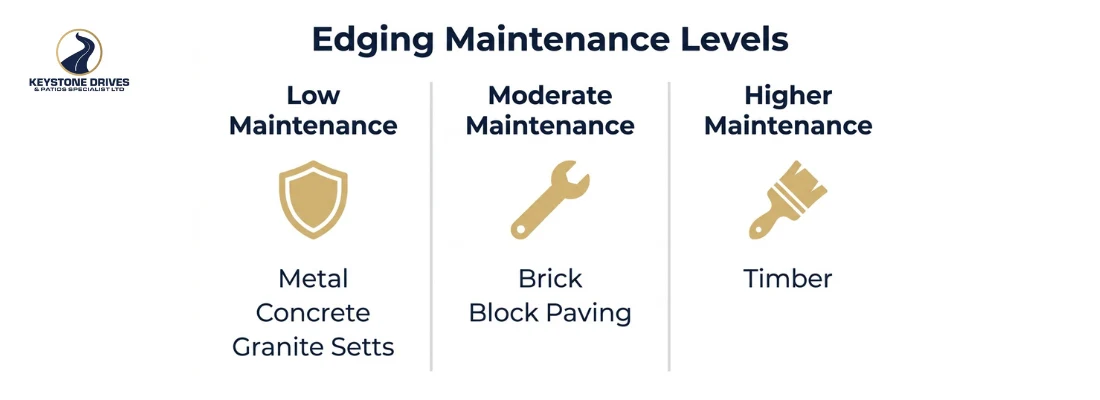
Maintenance requirements vary considerably by material:
- Low maintenance: metal, concrete, and granite setts generally need nothing more than an occasional clean
- Moderate maintenance: brick and block paving may need joints topped up with sand every few years
- Higher maintenance: timber edging benefits from a re-treatment every two to three years to prevent rot
If your driveway surface itself is tarmac, our guide on how to clean a tarmac driveway covers the cleaning routine that will keep both the surface and its edging looking sharp for longer.
Conclusion
Driveway edging is one of those improvements that punches well above its cost. Whether you go for classic brick, natural stone, or a simple timber restraint, the right border finishes off your driveway, protects the surface underneath, and adds a genuine lift to your home’s kerb appeal. The best choice ultimately comes down to your driveway surface, your property style, and how much maintenance you are happy to take on.
If you are in Bath or the surrounding area and would like advice on the right edging for your driveway, our team at Keystone Drives & Patios Specialist Ltd, trusted paving contractors in Bath, would be happy to help. Get in touch for a free, no-obligation quote, and take a look at our paving and landscaping ideas for further inspiration.
FAQ'S
There is no single best option. Brick and concrete suit most UK homes for their balance of cost and durability, while granite or sandstone setts offer a premium finish for period or stone-built properties. The right choice depends on your driveway surface, budget, and the style of your home.
Installed costs typically range from £15 per linear metre for basic timber edging up to £120 per linear metre for granite setts, with concrete and brick sitting in the £25 to £55 range.
Simple gravel restraints or timber battens are manageable DIY projects. Anything requiring excavation, drainage work, or edging on a sloped driveway is best left to an experienced contractor.
Plastic or composite restraints, recycled concrete, and reclaimed brick are among the most affordable options, though they generally need replacing sooner than premium materials.
Edging itself rarely needs planning permission. However, if your project involves altering a dropped kerb or the point where your driveway meets a public road, you will need approval from your local council’s highways department before work begins. Bath and North East Somerset Council, for example, sets out clear rules on when dropped kerb and access works need planning permission, including extra considerations for listed buildings and conservation areas. It is always worth checking with your own local authority before starting any work that affects the highway boundary.