Email Us

Creative Paving And Landscaping Ideas For Every
Outdoor Space In Bath
Whether you’ve got a small front garden in a Bath terrace or a larger plot out towards Combe Down, the right combination of paving and landscaping can completely change how your outdoor space works. A tidy driveway keeps mud and puddles under control. A well-planned garden guides how people move through it and shows off the plants you actually want people to notice.
This guide brings both sides together- driveway paving and garden landscaping- with practical ideas, real cost figures, and the planning rules that catch quite a few Bath homeowners out.
Why Paving And Landscaping Matter
Good paving and landscaping aren’t just about appearance. A properly laid driveway improves safety by eliminating the trip hazards and standing water associated with a cracked or aging surface. In the garden, thoughtful hard landscaping- patios, pathways, retaining structures- controls how water drains across a sloped plot, which matters more here than in flatter parts of the country, given how many Bath gardens sit on a hill.
Done well, it also adds to your home’s kerb appeal and resale value. Done badly- poor drainage, mismatched materials, no thought given to how paving and planting work together- it’s one of the more visible things a buyer notices when viewing a property.
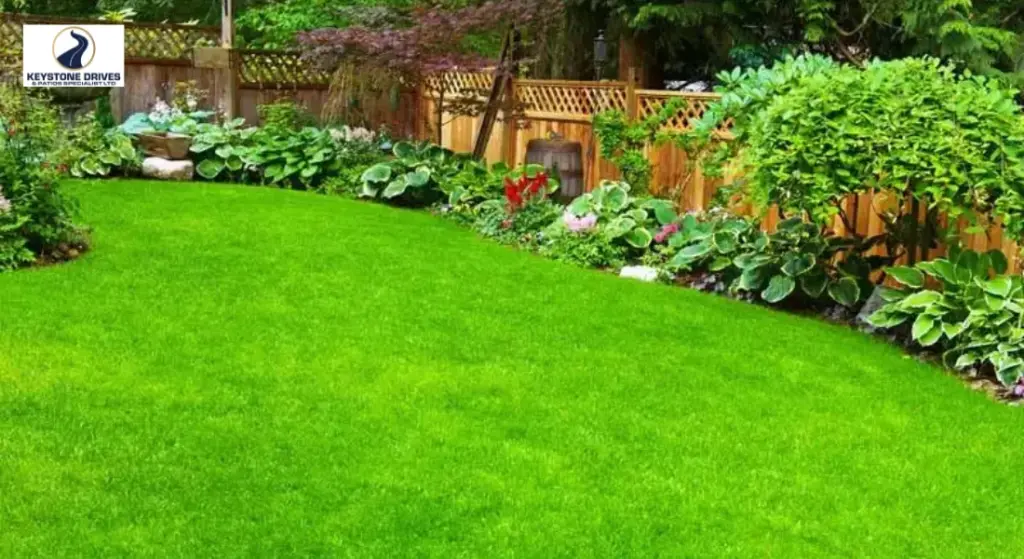
Driveway Paving Ideas For Bath Homes
1. Block Paving for Character and Durability
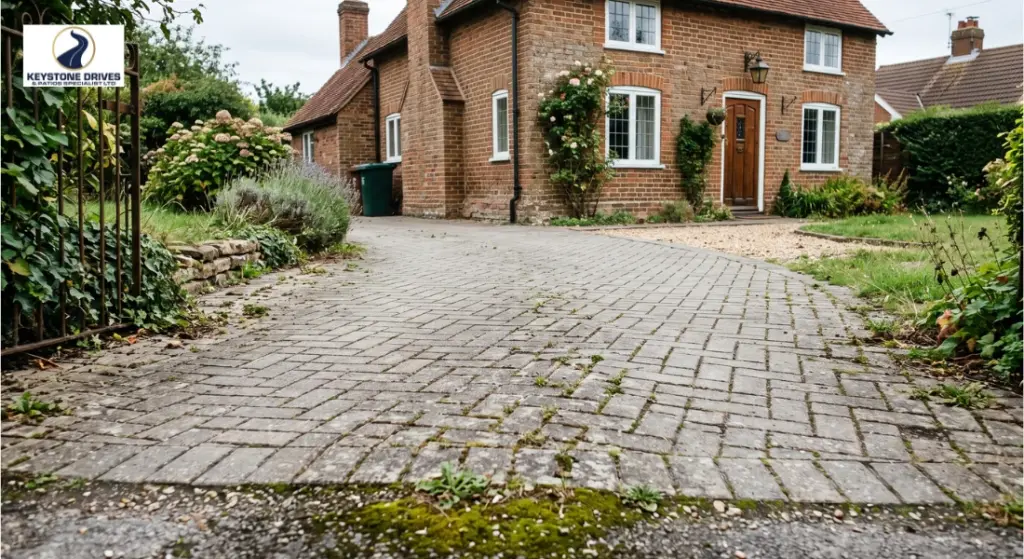
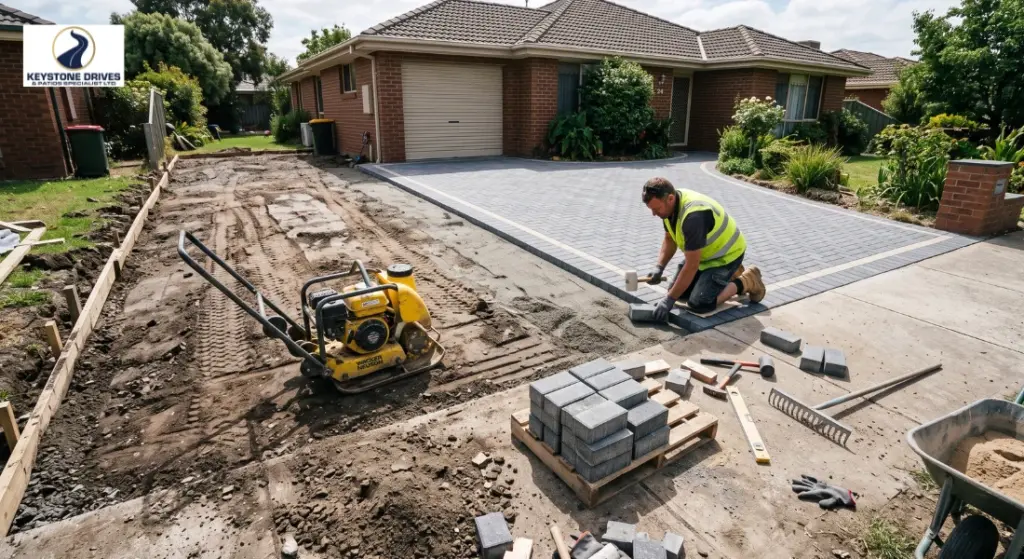
Block paving remains one of the most popular driveway paving ideas, largely because it’s durable and repairable in sections if a block ever cracks or stains. A herringbone pattern best handles regular vehicle weight, while a simpler stretcher bond keeps costs down without sacrificing durability.
2. Resin Bound Surfacing for a Modern, Low-Maintenance Finish
Resin-bound driveways have grown in popularity because they’re smooth, permeable, and require very little upkeep beyond an occasional sweep. It’s a strong choice for paved driveway ideas that avoid weed growth or settling issues that can affect gravel or poorly laid block paving over time.
3. Tarmac for a Simple, Cost-Effective Option
Tarmac is still one of the most budget-friendly driveway paving ideas, particularly for larger areas, and copes well with daily vehicle use. It won’t offer the same design flexibility as block paving or resin, but it’s a sensible option where function matters more than decorative detail.
4. Curved Driveways for a Softer Approach
A curved driveway softens the entrance to a property and creates a more considered first impression than a straight run, particularly on larger plots. Lining the curve with low planting or discreet lighting highlights the shape rather than fighting it.
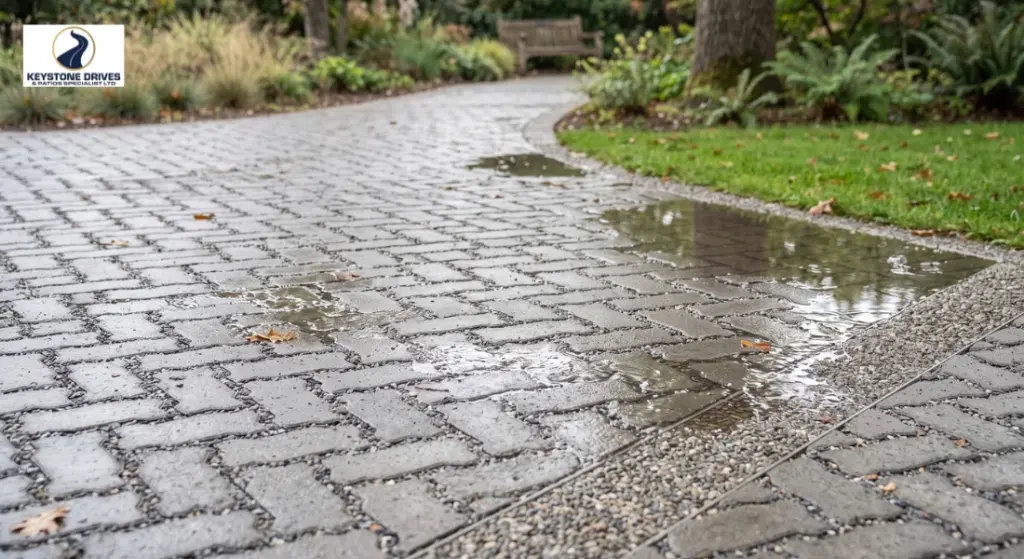
5. Permeable Paving to Stay Compliant and Reduce Flood Risk
Permeable block paving, resin, or gravel let rainwater drain through naturally rather than running off into the street, which matters on Bath’s sloped streets, and also affects whether your driveway needs planning permission .at all
Garden Paving And Landscaping Ideas
6. Patios in Natural Stone or Porcelain
A well-positioned patio is still one of the most requested garden landscaping ideas. Indian sandstone gives a timeless, textured finish that suits period properties, while porcelain offers a sleeker, lower-maintenance surface for a more contemporary garden.
7. Pathways That Connect the Garden
Garden pathways guide how a garden is used and can make even a modest plot feel larger by encouraging movement through different zones. A curved path suits a softer, cottage-style garden, while a straight path complements more contemporary paving and planting schemes.
8. Raised Beds to Add Structure
Raised beds, built from timber, brick, or rendered blockwork, define planting zones and make gardening considerably easier on sloped plots, where digging straight into the ground isn’t always practical. They also tie neatly into a retaining wall if your garden already needs one.
9. Gravel and Planting Combinations
For side returns, front gardens, or areas you don’t want to pave entirely, a mix of gravel and structured planting is a low-maintenance option that’s also naturally permeable, useful for drainage compliance if the area sits at the front of the house.
10. Zoned Outdoor Living Spaces
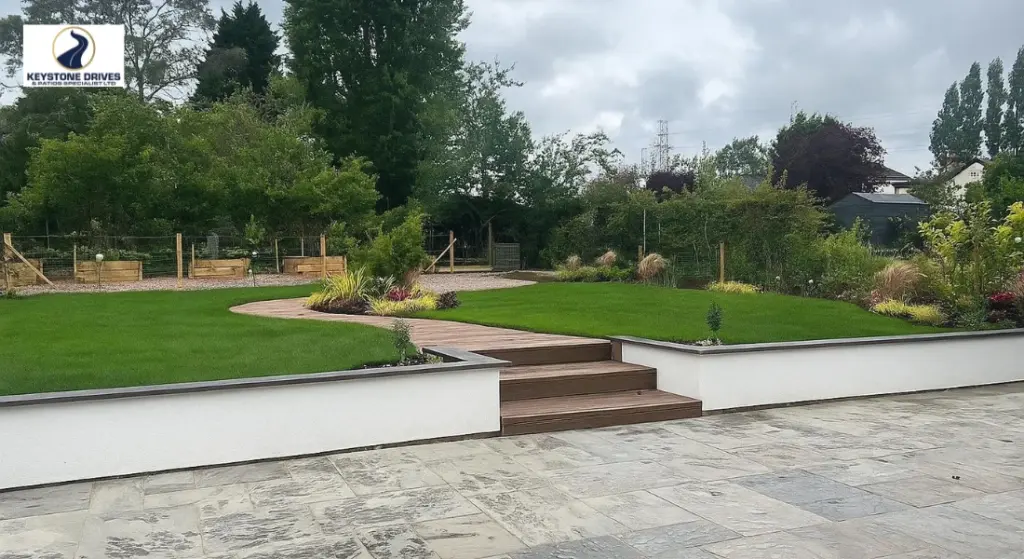
Rather than a single uniform patio, many Bath gardens now split the space into zones: a paved dining area, a lawn or planting area, and a smaller seating nook, often separated by a low retaining wall. This works particularly well on the sloped gardens common around Bathwick, Widcombe, and Combe Down, where a change in level naturally creates the divide.
Choosing The Right Materials For Paving And Landscaping
A few practical factors are worth weighing up before committing to a material:
Durability
Driveways need a surface that can take vehicle weight day after day; garden paving needs to handle frost and standing water through a Bath winter.
Maintenance
Resin and permeable block paving need very little upkeep, while natural stone and gravel need more regular attention to stay looking their best.
Style continuity
Matching or deliberately contrasting your paving with the property’s existing brick or stone usually gives a more considered result than choosing materials in isolation.
Slip resistance
Particularly important on sloped paths and driveways, where a smooth, non-textured finish becomes a genuine hazard in wet weather.
What Does Paving And Landscaping Cost In 2026?
| Surface Type | Typical Cost (per m²) | Best For |
|---|---|---|
| Tarmac | Around £80–£100 | Budget-friendly, high-traffic driveways |
| Block paving (concrete) | Around £90–£130 | Durable, design-flexible driveways |
| Permeable block paving | Around £35–£145 depending on spec | Drainage compliance, front gardens |
| Resin bound | Around £80–£120 | Modern, low-maintenance driveways |
| Indian sandstone / porcelain patio | Varies by material and finish | Garden patios and seating areas |
Do You Need Planning Permission For Paving In Bath?
A local paving company in Bath can save you real hassle here: if you’re paving more than 5 square meters of a front garden with a non-permeable material, standard concrete, most tarmac, or non-permeable block paving, and water isn’t directed to a lawn, border, or soakaway, you’ll usually need planning permission. Use a permeable surface, or direct run-off to a permeable area, and in most cases you won’t need to apply at all.
Given Bath’s conservation area status across large parts of the city, it’s worth checking with Bath and North East Somerset Council before starting front garden work, particularly on a listed or period property, where local restrictions can be tighter than the national default.
DIY vs. Professional Help
Some elements of a paving and landscaping project are genuinely suitable for a confident DIYer, planting borders, arranging garden furniture, or laying stepping stones through an existing bed. Anything involving groundwork, drainage, or a structural element- driveways, patios, retaining walls, is worth leaving to a professional. Poor sub-base preparation or missed drainage is the most common reason paving fails early, and it’s far more expensive to correct after the fact than to get right the first time.
Mistakes To Avoid
- Choosing a surface based on looks alone, without checking whether the sub-base and drainage underneath will support it in the long term.
- Ignoring drainage on sloped gardens, a real risk on Bath’s hillier streets.
- Paving over 5m² of a front garden with impermeable materials without checking whether planning permission applies.
- Treating paving and planting as separate decisions, rather than planning hard and soft landscaping together from the start.
- Underestimating groundwork costs, which are often the largest part of the bill even though they’re the least visible in the finished result.
Underestimating groundwork costs, which are often the largest part of the bill even though they’re the least visible in the finished result. If you’re unsure how to vet a contractor on this, see our guide on choosing the right paving company in Bath.
Quick Checklist
- Decide which zones need paving and which need planting before choosing materials
- Choose a permeable surface for any front garden area over 5m² to avoid planning permission
- Check whether your property sits in a conservation area before starting front garden work
- Get a written quote that includes groundwork and drainage, not just surface materials
- Plan pathways, patios, and planting together so the finished space flows as one design
Why Choose Keystone For Your Paving And Landscaping Needs
Keystone Drives & Patios Specialist Ltd handles paving, driveways, and landscaping as a single project rather than separate jobs assigned to different contractors. That matters most on the sloped, period properties common across Bath, where groundwork, drainage, and material choice all need to work together from the start rather than being fixed after something’s already gone wrong.
As a trusted provider of paving and landscaping services in Bath, we offer fixed-price quotes based on a proper site visit, so there are no surprises once work begins, and the same team sees the job through from groundwork to the final finish.
Whether you’re planning a full driveway replacement or a garden that ties together paving, planting, and structure, our team offers free, fixed-price quotes across Bath and the wider Somerset area. Get in touch with our paving and landscaping team in Bath to talk through the right combination of paving and planting for your outdoor space, or take a look at our block paving and patio installation services directly.
Conclusion
Transforming a driveway or garden doesn’t need to mean tackling everything at once. Whether you start with a single patio, a new driveway surface, or a full front-to-back redesign, the ideas above give you a practical starting point that suits Bath’s period properties, sloped gardens, and conservation area rules. The details that matter most- proper drainage, the right material for your specific site, and planning permission where it applies- are the same ones that separate a garden that looks good for a season from one that lasts for years.
FAQ'S
Resin-bound paving and porcelain patio tiles both require very little upkeep beyond occasional sweeping and resist the frost and damp that come with harder winters.
Only if you’re paving more than 5m² of front garden with a non-permeable surface and not directing water to a permeable area. Permeable materials avoid this in most cases, though properties in conservation areas should always check with the council first.
Yes, kerb appeal and a well-planned, functional outdoor space are both things buyers notice, particularly on period Bath properties where the exterior sets expectations for the rest of the house.
For anything involving groundwork or drainage, yes. These are the areas most likely to fail if not done properly, and the most expensive to fix afterward.