Email Us
How to Choose The Right Paving Company in Bath :
Complete Guide For Homeowners
Choosing a paving company in Bath is a bigger decision than most homeowners expect, and it’s rarely as simple as comparing three quotes and picking the middle one. Search “paving company near me”, and you’ll find dozens of contractors, most of them claiming the same things: fully insured, years of experience, free quotes. On paper, they can look almost identical. In practice, the standard of work behind those claims varies enormously, and the difference usually isn’t visible until well after the invoice is paid.
That’s what makes this decision harder than most home improvement jobs. A driveway or patio isn’t something you can easily undo if it goes wrong, and it won’t need replacing for 15 to 20 years if it’s installed properly. Bath’s older housing stock and varied ground conditions add another layer, so a contractor’s experience and process matter just as much as their price. This guide walks through how to actually tell a trustworthy paving contractor from one that only sounds like one: what to check before you hire, the questions worth asking, and the mistakes that catch out even careful homeowners.
How To Choose The Right Paving Company In Bath
The finish on a driveway or patio tells you almost nothing about how it was built. Two jobs can look identical on the day they’re completed and age completely differently over the following five years, because everything that determines longevity- the sub-base, the drainage falls, the compaction- is invisible once the surface goes down.
That’s worth bearing in mind before price becomes the deciding factor. Kerb appeal matters too, and matters more than people expect: research from the HomeOwners Alliance found that 68% of home buyers say kerb appeal influences their decision when viewing a property, and a driveway is usually the first thing they see. But a driveway that looks good for a season and fails within two years costs far more than the one that cost slightly more to begin with. The eight checks below will help you tell which kind of contractor you’re dealing with before you commit.
1. Ask how much of their work has actually been done in Bath
Ground conditions aren’t the same everywhere, and Bath’s aren’t especially forgiving. The clay content in the soil here means the ground shifts with the seasons; British Geological Survey research on shrink-swell behaviour explains how clay-rich ground expands when wet and contracts as it dries, which is precisely the movement a well-built sub-base has to be designed to withstand. Add in the slope of many Bath streets and the number of period properties with older drainage arrangements, and it becomes clear why generic experience isn’t quite the same as local experience.
A few direct questions will tell you a lot:
- How long have you actually been working in and around Bath?
- Can you point to finished jobs nearby, ideally on a property similar to mine?
- Are you familiar with what’s required for properties inside a conservation area?
A contractor who’s genuinely established locally won’t hesitate on any of these.
2. Ask to see finished work, not just marketing photos
Every paving company’s website shows its best day. What you actually want is a broader look, enough completed jobs to judge whether the quality is consistent, not just occasionally achievable.
When you’re looking through a portfolio, check for:
- Edging that’s straight and uniform, not slightly wavering
- A surface that sits flat, with no dips where water could collect
- Tidy transitions where one material meets another
- A visible fall in the surface directing water away from the house
If a company struggles to produce recent examples from your area, that’s worth noting.
3. Understand what each material is actually suited for
Not every surface fits every property, and a contractor who leads with one option regardless of your situation may be steering you toward what’s easiest for them rather than what’s right for you.
Block Paving
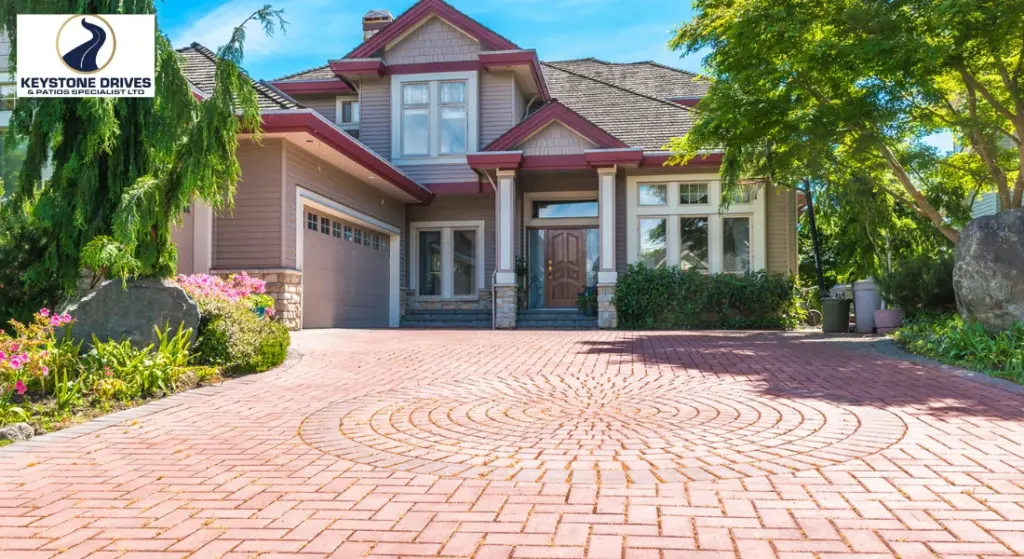
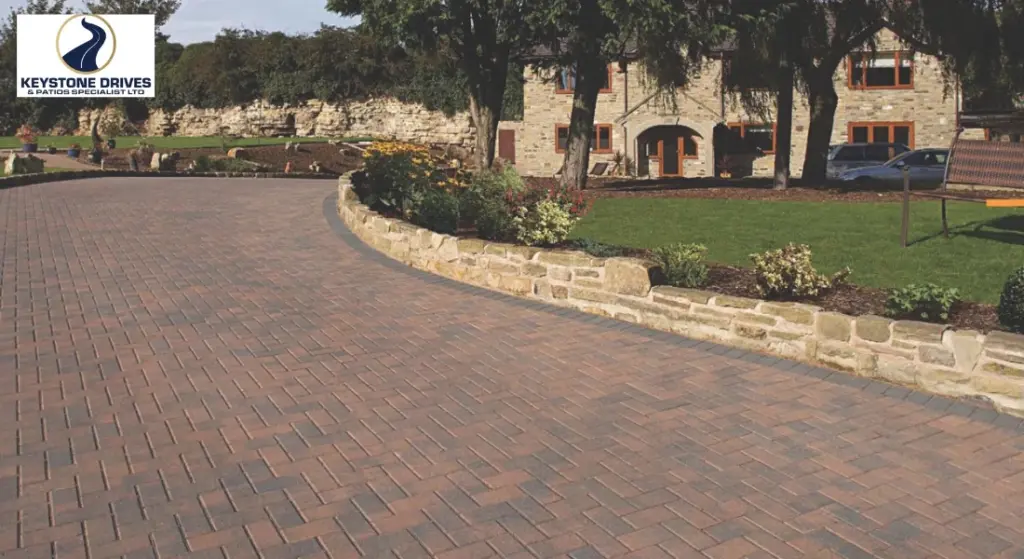
Remains the most flexible option, with a wide choice of colours and patterns, and works equally well for driveways and patios. Ask whether their process reflects the standards published by Interpave, the industry body for concrete block paving in the UK.
Resin-Bound Surfacing
A permeable, low-maintenance surface that meets SuDS (Sustainable Drainage Systems) requirements. Ideal for front driveways where planning permission may be needed for impermeable surfaces.
Tarmac
The most economical option for larger areas and holds up well over time when laid properly.
Natural Stone
Tends to suit Bath’s older housing stock particularly well, since the material complements the architecture rather than looking out of place against it.
The right contractor talks you through the trade-offs rather than pushing you toward whichever material they have the biggest margin on.
4. Compare quotes on what's included, not just the bottom line
Get more than one quote; two or three is sensible, and resist the pull toward whichever number is smallest. A quote that’s noticeably cheaper than the others has usually left something out.
A proper quote should spell out:
- Exactly which materials are being used, including brand and quantity
- Labour costs and a realistic completion timeframe
- What the groundwork and sub-base preparation actually involves
- How the old surface will be removed and disposed of
- VAT, itemised rather than folded in
Be cautious of anyone who quotes on the spot without measuring the site, or who wants a large deposit before anything’s been agreed in writing. Citizens Advice is direct about this: once you accept a quote, it’s a binding agreement whether or not it’s on paper, but only the written version protects you if there’s ever a disagreement about what was promised.
5. Confirm insurance and get any guarantee in writing
Public liability insurance isn’t a nice-to-have; it’s what protects you if something goes wrong on your property during the job, whether that’s damage to a wall, a fence, or a neighbour’s garden. Any contractor who can’t confirm this without hesitation shouldn’t be on your shortlist.
The same logic applies to guarantees. A contractor confident in their own work will put that confidence on paper. If they won’t, take that as a signal, not a coincidence.
6. Treat reviews as evidence, not decoration
Reviews across Google, Checkatrade, or Trustpilot are one of the few genuinely independent sources of information you have. Don’t just read the star rating; read how the company responds when something’s gone wrong, since that tells you more about how they’ll treat you than the five-star reviews will.
It’s also worth asking directly for references from recent local customers. A company that’s proud of its work won’t hesitate to put you in touch. Look for the same things recurring across different reviews; that’s a far stronger signal than any single glowing comment.
7. Pay attention to how they communicate before you've even hired them
The way a contractor behaves during the quoting process is usually a preview of how the job itself will go. Someone who’s slow to respond, vague about pricing, or pushy about getting a deposit before you’re ready is unlikely to improve once they’ve got your business.
Look for a company that replies promptly, puts a clear quote in writing within a reasonable time, and answers your questions properly rather than deflecting them. A written agreement before work starts should be standard, not something you have to request.
8. Check who's responsible for planning permission
The rule that’s caught out plenty of homeowners: since 2008, a new front driveway made of non-permeable materials needs planning permission once it exceeds 5 square metres. Government guidance on this sets out both the drainage reasoning behind the rule and when it applies.
In Bath specifically, this is worth taking seriously. As a UNESCO World Heritage City, large parts of Bath sit within conservation areas where planning controls go beyond the national baseline, particularly around anything visible from the street. A paving company in Bath that actually works here regularly should be able to tell you straight away whether your project needs consent, rather than leaving you to find out the hard way.
Questions To Ask Before You Hire A Paving Contractor
If you’re working out how to choose a driveway contractor, a few honest questions will tell you more than any brochure. Here’s what to ask, and why the answer matters:
- How many years of experience do you have with driveways or patios like mine?
- Can I see photos of similar projects you’ve completed nearby?
- What will the sub-base and groundwork involve for my property?
- How will drainage be managed, especially on a sloped or clay-heavy site?
- What materials do you use, and are they suited to the local weather?
- Is the quote fixed, or could the price change once work begins?
- Do you offer a written artistry guarantee, and for how long?
- Does public liability insurance cover you?
- What’s the expected timescale from start to finish?
- Who do I contact if an issue comes up after the job’s done?
A paving contractor worth hiring will answer these clearly and without hesitation. Vague or evasive answers to any of them are worth treating as a warning sign.
Where Keystone Drives & Patios Fits Into All Of This
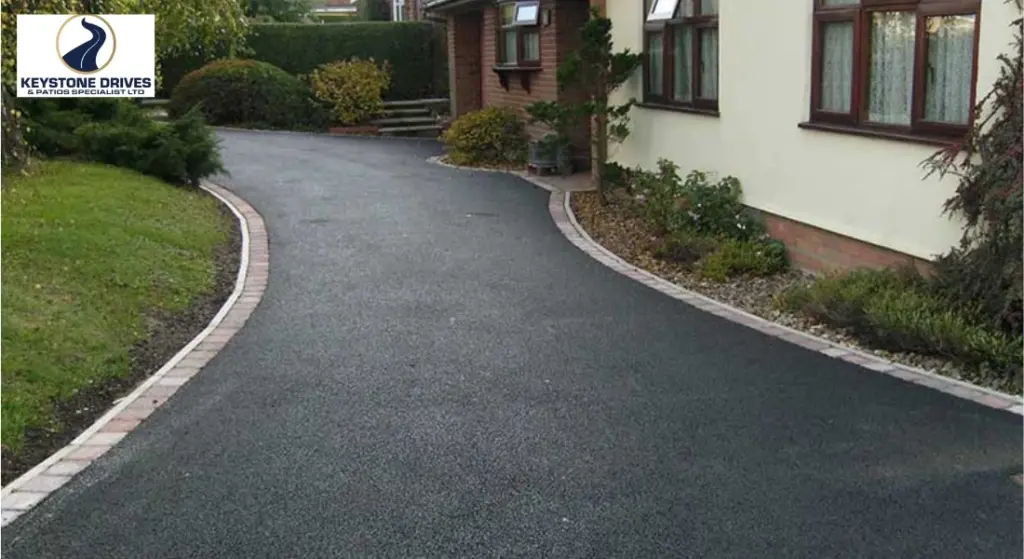
Keystone Drives & Patios Specialist Ltd has been laying driveways, patios, and outdoor spaces across Bath for years, and every point above is one we’d be happy to be judged against. We’re fully insured, based locally rather than covering Bath as an afterthought, and every job comes with a written workmanship guarantee.
We provide a wide range of paving and landscaping services in Bath, and we regularly work in Keynsham and Saltford.
Every project starts with a site visit and an honest conversation about what will actually work for your property, not a rushed sales pitch. You’ll get a detailed quote with nothing missing, and we won’t start work until you’re genuinely happy with the plan.
Conclusion
Picking the right paving contractor in Bath comes down to checking the things that don’t show up in a glossy photo: real local experience, verifiable past work, a properly itemised quote, and paperwork that protects you if anything goes wrong. Get those right, and the price becomes a much easier thing to compare fairly.
Thinking about a driveway or patio project? Get in touch for a free, no-obligation quote, or call us to talk it through with the team.
FAQ'S
Not if you use a permeable material, such as resin-bound surfacing or permeable block paving. If you’re planning an impermeable surface larger than five square metres on a front garden, you’ll need permission, and it’s worth checking early given how much of Bath sits within conservation areas. A local contractor should be able to tell you where you stand before any work begins.
Most residential jobs take two to five days, depending on size, material, and the amount of groundwork required. Bigger projects, or those needing significant excavation or drainage work, can take a week or more. Ask for a realistic timeframe as part of your quote rather than assuming it.
Block paving and natural stone both last 20 years or more when properly installed. Tarmac is a strong, cost-effective option for larger areas, and resin-bound surfacing holds up well while also solving most drainage requirements on its own. The best choice depends on your budget, your property, and how it needs to perform.
Genuine local reviews, a portfolio you can verify, confirmed public liability insurance, and a written guarantee are the four things worth checking before anything else. A reputable contractor answers questions directly and won’t rush you into signing anything.